You've Got 50 Friends on Your List — So Why Does Mobile Multiplayer Feel So Isolating?
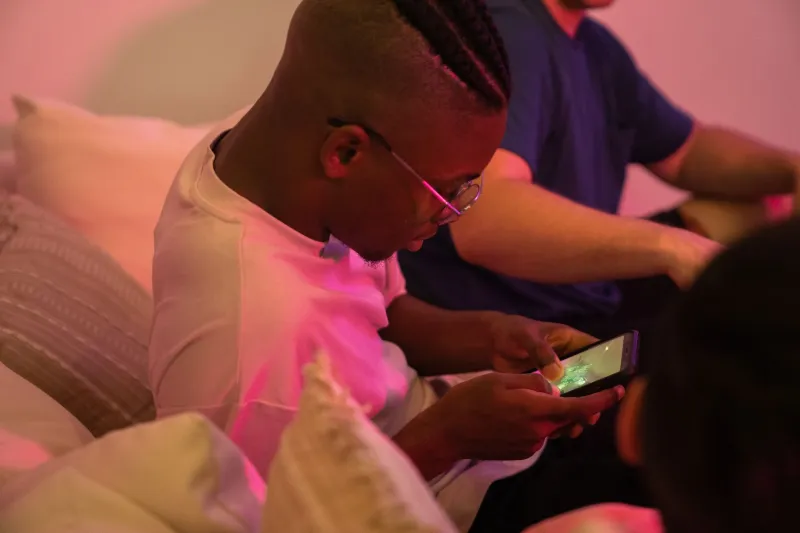
Picture this: you download the same mobile game as your buddy across town. You both create accounts, grind through the tutorial, and then try to actually play together. Fifteen minutes later, you're both staring at error messages, region mismatches, or — worst of all — a co-op mode that only lets you send each other gifts once every eight hours. Congratulations. You're now playing a social game in complete solitude.
This isn't a niche complaint. It's one of the most common frustrations among US mobile gamers right now, and it's getting louder. The devices in our pockets are more powerful than ever, 5G is rolling out across the country, and yet genuine, seamless multiplayer on mobile still feels like it's stuck in 2014. So what's actually going on?
The Async Trap Nobody Warned You About
A huge chunk of what mobile games call "multiplayer" isn't really multiplayer in the way most of us think about it. Asynchronous gameplay — where you take your turn, close the app, and wait for your friend to respond hours (or days) later — dominated early mobile design for practical reasons. Phones had limited battery life, spotty data connections, and processors that couldn't handle real-time syncing without overheating.
Those constraints made async a smart workaround back then. The problem is that a lot of developers never moved past it, even as hardware caught up. Many of today's most popular mobile titles still lean heavily on async mechanics because they're cheaper to build and easier to monetize. Waiting for your friend's next move? Perfect time to serve you an ad or nudge you toward a purchase.
For players who want to actually hang out and game together in real time — the way you would on a console or PC — async feels like a bait-and-switch. The game looks social. The friend list is right there. But the actual shared experience is about as live as leaving a voicemail.
Region Locks: The Invisible Wall Between You and Your Friends
Here's a scenario that plays out constantly in the US: you and a friend — maybe a college roommate who moved to a different state, or a cousin in Puerto Rico — try to join the same server in a competitive mobile game. One of you gets routed to a completely different server cluster. The matchmaking systems that were designed to reduce latency end up separating players who genuinely want to play together.
Region locking exists for legitimate technical reasons. Keeping players on nearby servers reduces ping, which matters enormously in fast-paced competitive titles. But the implementation in mobile gaming is often blunt and inflexible. Console and PC platforms have figured out how to let friends manually override server selection, accept the latency trade-off, and just play. Mobile games frequently don't offer that choice at all. The system decides for you, and that's that.
For a country as geographically spread out as the US, this hits harder than developers might realize. Friends separated by time zones, college students gaming with family back home, military families trying to stay connected — all of them run into invisible walls that the platform simply doesn't acknowledge.
Cross-Platform: The Promise That Keeps Not Delivering
Mobile gaming's relationship with cross-platform play is... complicated. A handful of titles — Fortnite, Call of Duty: Mobile, Genshin Impact — have made real progress here, letting mobile players jump into matches alongside console and PC users. It sounds great on paper, and for competitive games it can genuinely work.
But cross-platform multiplayer introduces its own friction points. Account systems that don't talk to each other. Progress that lives on one platform and won't transfer to another. Friend lists that exist in separate ecosystems with no bridge between them. You might be able to play cross-platform, but actually finding your friends across those platforms and coordinating together is often a manual, clunky process that requires swapping external IDs, Discord handles, or just texting each other constantly to figure out what server you're both on.
For casual players who just want to squad up without a 20-minute setup process, that friction is enough to make them give up entirely and go back to playing solo.
The Social Layer That's Really Just Marketing
It's worth calling out something that gets dressed up as multiplayer but is really just engagement mechanics with a social coat of paint. Friend leaderboards, gift-sending systems, guild structures that exist mainly to give you daily tasks — these features create the appearance of a social experience without delivering the actual thing.
They're not worthless. Seeing a friend's name on a leaderboard can genuinely motivate you to play more. Guilds can create a loose sense of community. But none of it scratches the itch of actually playing with someone, communicating in real time, coordinating strategy, and sharing a genuine moment inside a game. It's the difference between texting someone a photo of your dinner and actually sitting across the table from them.
The Games That Are Actually Getting It Right
Here's the good news: some developers are putting in the real work, and it shows.
Among Us is a legitimate case study. Simple enough to run on almost any phone, real-time, and built around social interaction as the entire core mechanic. It doesn't just have multiplayer — it is multiplayer. The game doesn't function without it.
Clash Royale and Brawl Stars from Supercell have done a solid job building real-time competitive and cooperative modes that actually feel live, with robust friend systems that let you spectate, challenge, and club up with people you know.
Pokémon GO deserves mention for cracking the location-based social puzzle better than almost anyone else — raids and community events create genuine shared experiences that pull friends into the same physical or virtual space.
What these games share is a design philosophy that treats multiplayer as a feature worth engineering properly, not a checkbox to tick before shipping.
What Needs to Change
The path forward isn't mysterious. It requires developers to invest in flexible server architecture that gives players more control over where they play. It requires account systems built for portability from day one. It requires treating cross-platform friend integration as a launch priority rather than a post-release patch.
Most importantly, it requires the industry to stop confusing "social features" with actual multiplayer. US mobile gamers are sophisticated enough to know the difference, and they're increasingly vocal about demanding the real thing.
The hardware is ready. The networks are getting there. The missing piece is a genuine commitment from developers to build mobile multiplayer that actually lives up to the word. Until that happens, a lot of us are going to keep staring at full friend lists and feeling strangely alone.
At G2G Mobile Arena, we believe gaming on the go should mean gaming together on the go — not just gaming in parallel while pretending otherwise. The arena is more fun with people actually in it.