Your Two-Year-Old Flagship Is Already Falling Behind — Here's What's Actually Driving Mobile Gaming Graphics
Not that long ago, a high-end smartphone felt like it had years of runway ahead of it. You dropped $900 on a device, and the assumption was you'd be gaming comfortably on it well into the future. That math is getting harder to defend. The mobile GPU arms race has accelerated to a point where chips that were considered elite in 2022 are now visibly struggling with some of the most graphically demanding titles hitting app stores today.
This isn't just marketing noise from phone manufacturers trying to move units. The gap between what today's AAA mobile games demand and what older hardware can comfortably deliver is measurable — and it's widening faster than most casual players realize.
What's Actually Inside Your Phone's GPU
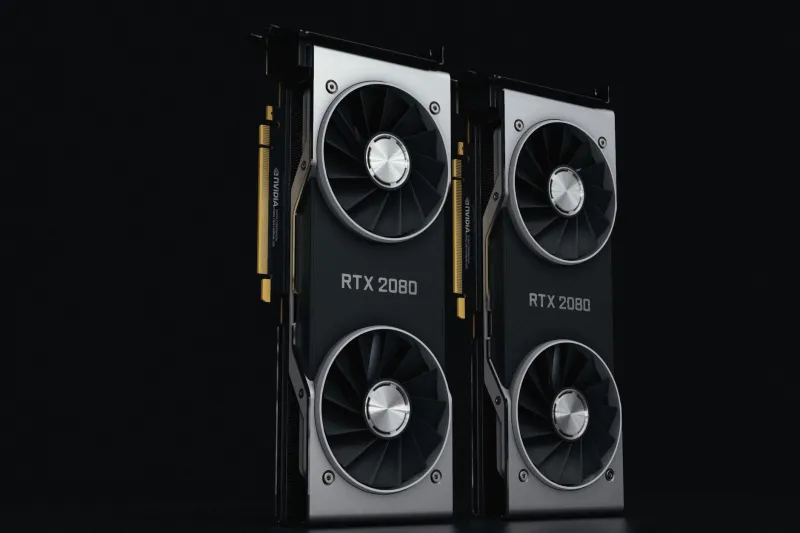
Most people know their phone has a processor, but fewer understand that mobile gaming performance lives and dies by a separate — though integrated — component: the graphics processing unit. On Android devices, you're typically looking at chips like Qualcomm's Adreno series or Arm's Mali architecture. Apple's A-series and M-series chips come with their own custom GPU designs that have consistently set the performance ceiling for mobile gaming.
The key metric isn't just raw processing power. It's how efficiently a mobile GPU handles tasks like ray tracing approximations, shader complexity, texture streaming, and sustained thermal performance. That last one matters more than most spec sheets admit. A chip might benchmark brilliantly in short bursts, but if your phone can't keep it cool during a 45-minute gaming session, it'll throttle itself down to protect from overheating — and your frame rates will crater right when you need them most.
Recent flagship chips — we're talking the Snapdragon 8 Gen 3, Apple's A17 Pro, and the Dimensity 9300 — have made significant jumps in ray tracing support, AI-assisted upscaling, and sustained clock speeds under load. Devices running chips from two or even three generations back simply don't have the architectural support for some of these features at all. It's not a software update away. The hardware either has it or it doesn't.
The Games That Are Pushing the Limits
For years, mobile gaming had a reputation for lightweight, casual experiences. That stereotype has been dead for a while now, but the latest wave of titles is really hammering the nail in the coffin.
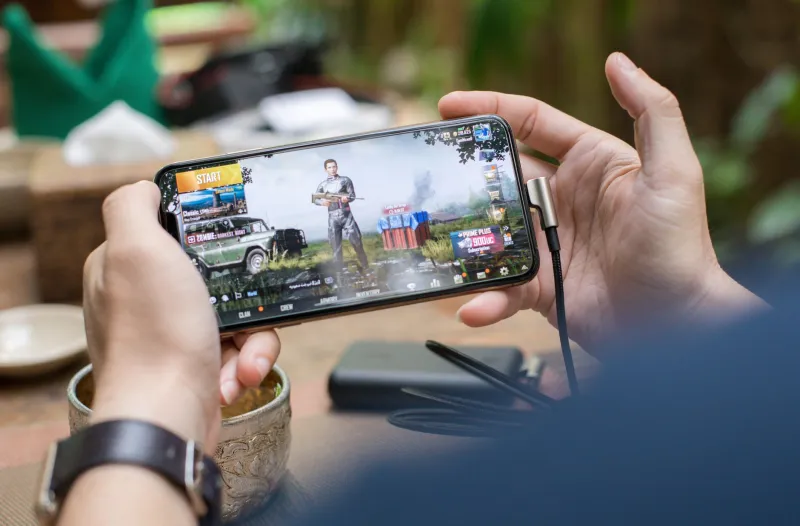
Games like Genshin Impact, Diablo Immortal, and more recent releases from major studios are shipping with graphics settings that would make a mid-range PC work up a sweat. Dynamic lighting systems, high-resolution texture packs, and complex particle effects are increasingly standard in titles targeting the US market — where players have come to expect a visual experience that competes with console gaming.
Developers building for these titles face a genuinely difficult balancing act. One mobile game developer working on a currently unannounced title described the challenge bluntly: you're essentially building the same game for hardware that spans a five-year performance gap. The flagship experience and the mid-range experience have to coexist in the same app, which means a lot of dynamic scaling, aggressive level-of-detail management, and settings menus that most players never touch but that do a lot of heavy lifting behind the scenes.
The result is that players on older or mid-range devices often don't realize they're running a significantly stripped-down version of the same game their friend on a newer phone is playing. The game loads, it runs, it looks decent enough — but the full visual experience is quietly being withheld.
Mid-Range Phones: The Quiet Losers in This Race
Here's where it gets a little uncomfortable. The mid-range segment — phones in the $300 to $500 range that represent the bulk of what most Americans actually buy — is getting squeezed hard. Chips like the Snapdragon 6 Gen 1 or MediaTek's Dimensity 7000 series are capable devices for everyday use, but they're increasingly hitting walls with graphically intensive games.
More frustratingly, the gap between mid-range and flagship GPU performance has actually grown over the last two years, not shrunk. Flagship chips have leaped forward aggressively, while mid-tier silicon has improved more incrementally. If you bought a mid-range Android device in 2022 or 2023 expecting it to handle mobile gaming for the next few years, you may be hitting those limitations sooner than expected.
Apple's ecosystem is slightly more forgiving here. Even older iPhones tend to receive software optimization support longer, and Apple's GPU architecture has historically been efficient enough that a two- or three-year-old iPhone still holds up reasonably well in most titles. But even that buffer is shrinking as developers push harder on graphical fidelity.
Do You Actually Need to Upgrade?
Honestly? Maybe not. And this is where G2G Mobile Arena's whole philosophy comes in — gaming on the go is about the experience, not the spec sheet.
Before you start eyeing a new flagship, ask yourself a few questions. What are you actually playing? If your go-to games are puzzle titles, card games, turn-based strategy, or anything that doesn't lean hard on real-time 3D rendering, your current phone is probably fine for years to come. The GPU arms race is very real, but it's primarily relevant if you're chasing the most graphically demanding experiences.
If you are into those demanding titles, the smarter play before upgrading might be a settings audit. Most AAA mobile games have more granular graphics controls than players bother exploring. Dropping texture quality one tier, disabling motion blur, and capping your frame rate at 30fps instead of chasing 60 can dramatically extend how long your current device stays viable — and often has a smaller visual impact than you'd expect.
For players who genuinely want the best visual experience and are due for an upgrade anyway, the current generation of flagship chips is a meaningful leap. But buying a new phone specifically to play games better is a decision worth sitting with. Mobile titles are increasingly designed to scale down gracefully, and developers have a strong financial incentive to keep older hardware supported — the install base on those devices is simply too large to abandon.
What to Watch Going Forward
The next frontier in mobile GPU development isn't just raw performance — it's smarter performance. AI-assisted rendering, where the GPU uses machine learning to upscale lower-resolution frames in real time, is already present in some flagship chips and is likely to trickle down to mid-range hardware within the next year or two. When that happens, the gap between tiers should narrow somewhat, at least in terms of perceived visual quality.
Cloud gaming is also quietly becoming a more realistic option for players who want high-fidelity experiences without the hardware cost. Services that stream console-quality games directly to your phone are maturing, and for a stable WiFi or 5G connection, they're increasingly worth considering as a complement to local play.
For now, though, the practical takeaway is this: if your phone is two or more years old and you're starting to notice stuttering, longer load times, or reduced visual settings in newer titles, that's not a bug. That's the GPU arms race catching up to you. Whether you upgrade or play smarter with what you have, understanding what's driving those limitations puts you in a better position to make the call that actually fits how you game.