How Bigger Phones Are Actually Shrinking Mobile Game Design
There's a cruel irony sitting in your pocket right now. That massive, gorgeous display you paid a premium for — the one with the edge-to-edge glass and the pixel density that makes everything look like it was painted by hand — might actually be making your mobile games worse. Not the graphics. Not the frame rate. The games themselves.
As phones have ballooned from the 4-inch form factor of a decade ago to the 6.7, 6.9, even 7-inch slabs that dominate today's flagship market, something quietly broke in the relationship between hardware and game design. And most players haven't noticed — until now.
The Thumb Zone Problem Nobody Talks About
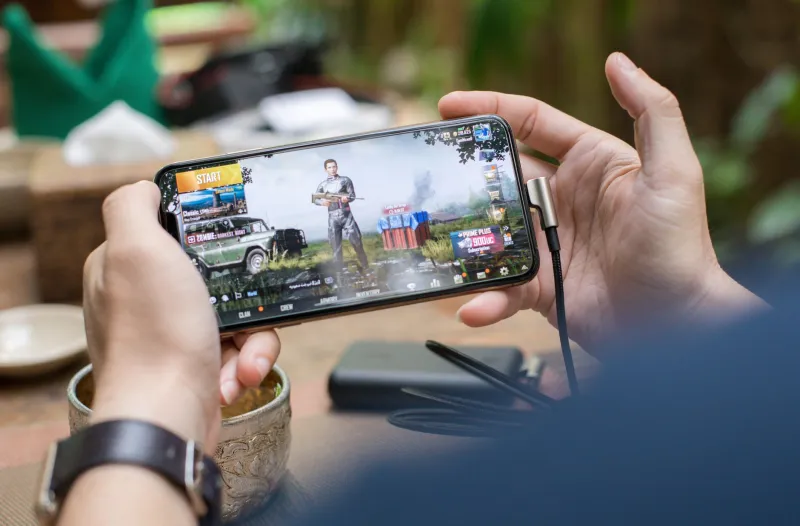
Here's the basic physics of the issue. When you hold a modern large-format phone — say, a Samsung Galaxy S24 Ultra or an iPhone 15 Pro Max — with one hand, your thumb can comfortably reach maybe 40 to 50 percent of the screen. That reachable zone, sometimes called the "thumb zone" in UX circles, basically defines where interactive elements have to live if a game wants to stay playable without requiring two hands.
A few years ago, when phones were smaller, that constraint wasn't as punishing. Developers had more usable real estate proportional to what thumbs could actually access. Now, with screens pushing toward tablet territory, designers face a genuine dilemma: do you put important controls where thumbs can reach them and waste the upper half of a stunning display, or do you spread things out and force players into awkward two-handed grips?
Most studios are quietly choosing option one — and the gameplay is suffering for it.
When Design Bends to Hardware
The clearest casualties are games that used to reward precision and complexity. Strategy titles, action RPGs, anything that once featured layered menus or skill trees spread across the screen — these genres are getting flattened. Developers are consolidating controls, shrinking option sets, and stripping out secondary mechanics that would require tapping in the "danger zones" near the top corners or center of a large display.
One indie developer who's shipped three titles on iOS and Android described the process bluntly in a community forum post that made the rounds earlier this year: "We had a full crafting system in our original design. Playtesting on big phones showed that 60 percent of users were dropping the game during crafting sequences. We cut it. Not because it was bad design — it tested great on smaller devices — but because nobody wants to do a two-handed shimmy just to forge a sword."
That's not an isolated story. It's becoming standard practice, and it's reshaping entire game categories from the inside out.
Tablets Make It Worse, Not Better
You might think tablets would solve the problem — more screen, more room to spread out, problem solved. But tablet gaming introduces its own set of contradictions. Most people don't play tablets with one hand. They prop them up, hold them in landscape with both hands, or set them flat on a surface. That changes the ergonomic math entirely, and developers now have to design for both postures without knowing which one a given player is using at any given moment.
The result? A lot of studios are defaulting to the lowest common denominator. Build for the most restrictive scenario, then scale up. Which means the expansive, complex experience that a big screen could theoretically support never actually materializes, because the design was already neutered before it got there.
Some publishers have tried adaptive UI systems — layouts that shift based on detected screen size — but these require significant extra development time and budget that smaller studios simply don't have. And even the best adaptive systems tend to feel like a compromise rather than a purpose-built experience.
The Games That Are Pulling It Off
To be fair, not everyone is losing this battle. A handful of developers have found genuinely clever ways to work with the new screen reality rather than against it.
Games built around deliberate, slower-paced interaction — turn-based tactics titles, puzzle games, card builders — have an easier time because their mechanics don't depend on split-second taps in precise locations. They can afford to let players reach across the screen because the stakes of a slightly awkward tap are lower.
Some action games have leaned hard into customizable HUD layouts, letting players drag and resize every control element to fit their specific grip style. It adds friction to the onboarding experience, but players who invest in setting it up tend to stick around longer. That's a real design win, even if it's not elegant out of the box.
And a few studios have gone the opposite direction entirely — designing games specifically for large-screen two-handed play, essentially treating big phones as handheld consoles with touch controls. These games tend to look and feel more ambitious, but they're also self-selecting for a narrower audience willing to commit both hands to a gaming session on their phone.
What This Means for You as a Player
If you're gaming on a big phone and something feels slightly off — like the experience is almost there but not quite clicking — there's a decent chance the screen size is part of the equation. It's not your imagination, and it's not always a skill issue.
A few practical things worth knowing: if a game offers HUD customization, spend five minutes with it before you decide the controls are bad. A lot of frustration dissolves once elements are repositioned to where your thumbs actually land. If you're playing something that feels cramped or awkward in portrait mode, flip to landscape — many games have a second layout hiding in there that's dramatically better for larger screens.
And if you're choosing between a game on your phone versus a tablet, think about the genre first. Fast-paced competitive games often feel worse on tablets despite the bigger screen, simply because the form factor changes your grip and reaction time. Slower, more strategic games tend to shine.
The Arena Gets Bigger, But Does the Game?
Here at G2G Mobile Arena, we're all about getting the most out of gaming wherever you are — and that means understanding when the hardware in your hands is shaping the experience in ways you didn't sign up for. Bigger screens are genuinely impressive. They make movies look incredible, browsing feel effortless, and streaming content a genuine pleasure.
But games aren't passive experiences. They require input, precision, and design that respects the physical reality of how you're holding your device. Until developers and hardware makers get more in sync about what these bigger canvases actually demand from game design, the paradox is going to keep quietly chipping away at experiences that could be — and in some cases used to be — a lot more interesting.
The screen got bigger. The question is whether the games will ever catch up.