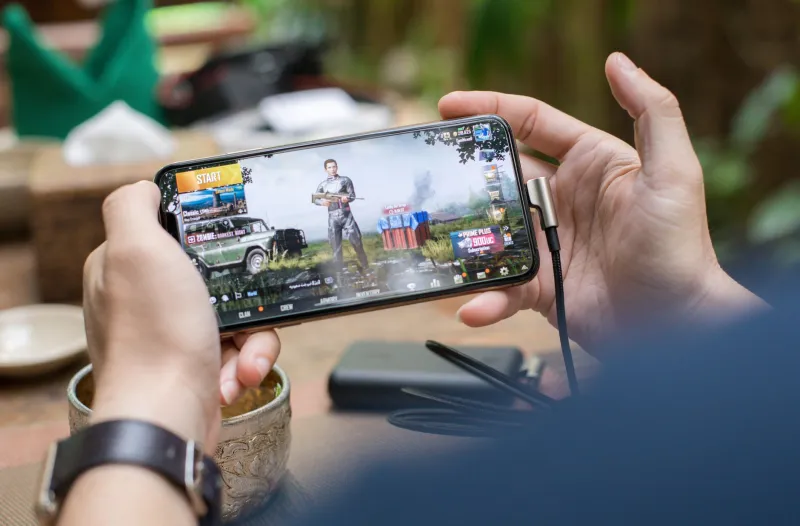
Where Did Everyone Go? The Silent Friend-List Massacre Happening Across Mobile Gaming
You remember the crew. Six of you, deep in a clan war, hitting the group chat every night around 10 PM to coordinate raids. Then Marcus got a new phone — switched from Android to iPhone — and suddenly he's just... gone. Not blocked. Not ghosted. Just swallowed whole by a different ecosystem.
This is one of the most quietly frustrating realities in mobile gaming right now, and it almost never gets talked about. Your friend didn't abandon you. The platform did it for both of you.
The Walled Garden Nobody Warned You About
Mobile gaming has always had a fragmentation problem, but the social layer is where it stings the most. When you're gaming on a console, your PlayStation Network or Xbox Live account travels with you across hardware generations. Your friends list is yours. Your chat history is yours. Your identity in that community is persistent.
Mobile gaming doesn't work that way — at least not most of the time.
A huge chunk of popular mobile titles tie their social infrastructure to either a platform-native account system or a proprietary in-game network. That means your friend list in one game might live inside Apple's Game Center, while another game stores your squad roster on its own servers, and a third uses Google Play Games. The moment someone jumps from one device ecosystem to another, those connections can shatter like a dropped screen.
The worst part? Neither of you gets a notification. No "Your friend Marcus is no longer reachable on this platform." You just start noticing the silence.
Real Players, Real Fallout
Talk to mobile gamers long enough and you'll start hearing the same story with different names.
Jessica, a competitive player based in Atlanta, described losing nearly her entire guild when a popular mobile RPG she'd been playing for two years migrated its social system to a new proprietary login. "Half the people I'd been playing with for over a year just didn't make the transition," she said. "Some didn't know they had to re-link accounts. Some tried and couldn't figure it out. We had a Discord server, but not everyone was in it, so we just... scattered."
That's the other thing nobody talks about: the workarounds players build to survive ecosystem fragmentation. Discord servers. Group texts. Shared spreadsheets to track clan members across platforms. These aren't features the games provide — they're duct-tape solutions that players invented because the games themselves couldn't hold communities together.
For a lot of casual and mid-core mobile gamers, that extra layer of effort is too much. They don't join the Discord. They don't add people on a third-party app. And so when the in-game connection breaks, the friendship goes with it.
Why the Platforms Have Very Little Incentive to Fix This
Here's the uncomfortable truth: keeping you inside a walled garden is good for business.
Apple wants you buying games on iOS and using Apple's social infrastructure. Google wants you in the Play ecosystem. Individual game publishers want you logging in through their accounts because it gives them better data and more control over the user relationship. Cross-platform social interoperability — the ability to be friends with someone regardless of what device they're on — doesn't serve any of those interests particularly well.
There are exceptions, of course. Games like Fortnite, Call of Duty: Mobile, and a handful of other big-budget titles have invested in account systems that genuinely follow you across platforms. You can friend someone on iOS and still see them when they're playing on Android. Your chat history persists. Your squad stays intact.
But those games are the outliers, not the rule. The majority of the mobile gaming catalog — especially the mid-tier and indie titles that make up the bulk of what people actually play day-to-day — don't have the resources or the motivation to build that kind of infrastructure.
The Hidden Cost to Mobile Gaming Culture
This isn't just a convenience issue. It's quietly stunting the growth of mobile gaming as a social experience.
Console and PC gaming communities have had decades to build persistent social cultures. You can find people on Reddit who've been gaming with the same group of online friends for fifteen years, all because their platform accounts kept those connections alive through hardware upgrades and life changes. Mobile gaming, for all its explosive growth in player numbers, hasn't developed that same kind of social depth — and ecosystem fragmentation is a big reason why.
When friendships in mobile games are inherently fragile, players don't invest in them the same way. You're less likely to commit to a long-term clan or guild if you know half the members might disappear next time someone buys a new phone. You're less likely to form the kind of bonds that turn casual players into deeply engaged, long-term community members.
For a platform that's supposedly in your pocket everywhere you go, mobile gaming can feel surprisingly lonely.
What's Actually Changing (Slowly)
The good news is that the conversation is shifting, even if the solutions are still catching up.
A growing number of developers are moving toward universal account systems — login with email or a dedicated game account rather than tying everything to Apple ID or Google Play. This gives players a persistent identity that survives platform switches. Some studios are also integrating directly with cross-platform social tools, making Discord or other third-party apps a first-class part of the experience rather than an afterthought.
There's also increasing pressure from players themselves. Mobile gaming communities are getting louder about this issue, and when a game loses thousands of active players because a social system migration went badly, that shows up in the revenue numbers. Publishers are starting to notice.
Apple's own Game Center has been quietly expanding its cross-game social features, and Google Play Games continues to evolve. Neither solution is perfect, and neither solves the Android-to-iOS divide, but the trajectory is at least pointed in the right direction.
What You Can Do Right Now
Until the industry catches up, there are some practical moves that can help protect your gaming friendships from ecosystem collapse.
First, always add your closest gaming friends somewhere outside the game itself — a Discord, a group chat, anything that lives outside the walled garden. Second, when you're joining a new game community, look for whether the game uses its own account system versus a platform-native one. Games with their own login tend to be more portable. Third, if you're planning a phone upgrade, do a social audit before you switch — identify who you'd lose and make sure you have another way to reach them.
None of this should be necessary. The fact that it is says a lot about where mobile gaming's social infrastructure still needs to grow.
Your gaming friends shouldn't have to survive a platform change just to keep playing with you. The technology to fix this exists. Now we just need the will to use it.