Why Your Favorite Mobile Game Turns Into a Mess the Second You Plug It Into a TV
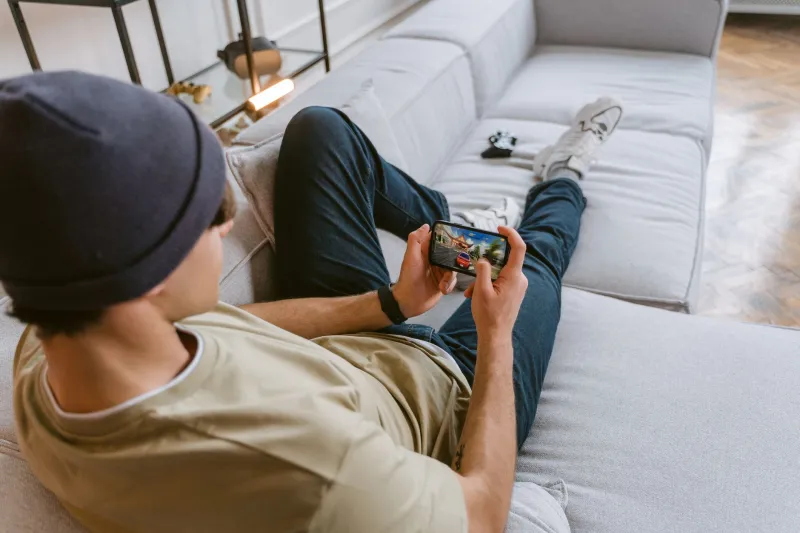
You've been grinding a mobile game for weeks. You're good at it. Like, embarrassingly good. Your thumbs move on instinct, your reaction time is dialed in, and every session feels smooth. Then someone suggests hooking your phone up to the TV or playing the console version — and suddenly you're fumbling around like you've never touched the game before.
This isn't a skill issue. It's a design issue. And it happens constantly, in both directions.
Mobile games and console games aren't just the same experiences running on different hardware. They're fundamentally different animals built around completely different assumptions about who you are, where you're sitting, and how long you're playing. When developers try to bridge that gap without rethinking things from scratch, the result is almost always a mess.
The Phone Is the Controller — And That Changes Everything
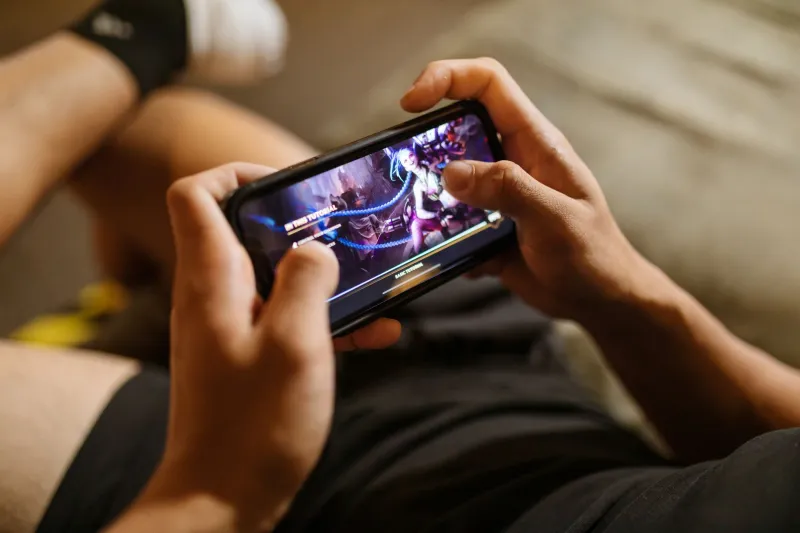
Here's something most people don't consciously think about: when you play a mobile game, your hands are literally touching the screen where the action happens. There's no separation between input and display. You tap a character, you swipe to dodge, you pinch to zoom — your fingers are directly interacting with the game world in a way that feels almost physical.
Console controllers don't do that. There's a layer of abstraction between your hands and what's happening on screen. That's not a knock on controllers — they're incredible tools — but it means the entire input philosophy has to be different.
Games like Among Us or Pokémon GO feel natural on a touchscreen because they were designed for the intimacy of that interaction. Scale them up to a TV with a DualSense in your hands and something feels off. The controls get mapped awkwardly, the UI looks like it was designed for ants, and the pacing that felt perfect on a five-second glance now drags across a 55-inch screen demanding your full attention.
Screen Size Rewrites the Rules of Game Design
Mobile game designers work within tight real estate. They have to make every pixel count, build interfaces that work at arm's length on a small screen, and create visual hierarchies that communicate information instantly because players are often distracted — on the subway, waiting in line, half-watching TV.
That constraint isn't a limitation. It's actually a creative forcing function that produces some genuinely clever design. Icons are big and readable. Core actions are front and center. Everything unnecessary gets stripped away.
But blow that same interface up to a living room TV and the careful economy of the design falls apart. What looked clean on a 6-inch screen looks sparse and weirdly oversized on a 75-inch panel. Worse, the game's actual content — levels, environments, character models — often wasn't built with enough visual detail to survive that kind of scrutiny. Mobile assets are optimized for small screens. Up close on a big display, the seams show.
The Session Length Problem Nobody Talks About
Mobile game design is built around short, punchy sessions. Developers know you might get interrupted at any moment. So they design loops that feel satisfying in two minutes, checkpoints that happen constantly, and progression systems that reward even brief playtime.
Console gaming culture is almost the opposite. Players sit down with a controller expecting to commit. Games are built for longer arcs, deeper story beats, and mechanical complexity that takes time to develop. There's an implicit agreement between player and developer: I'm here for a while, give me something substantial.
When a mobile game gets ported to console without rethinking this, players often feel cheated. The game feels shallow or repetitive in ways that didn't bother them on mobile because the context was completely different. What worked as a five-minute pick-up-and-play loop feels thin when you're two hours into a couch session expecting depth.
Console Games Don't Travel Well Either
The reverse problem is just as real, and honestly, maybe even more common. Big console franchises see the massive mobile market and decide to bring their IP to phones. The results are... mixed, to put it generously.
Take any game that was built around a dual-stick controller scheme and try to replicate it with virtual thumbsticks on a touchscreen. It's rough. Not because touchscreens are bad, but because virtual thumbsticks are a band-aid solution that mimics physical controls without actually being physical controls. You lose haptic feedback, you lose the muscle memory of analog stick positioning, and you lose the precision that makes fast-paced console gameplay feel responsive.
Games like Fortnite have done a better job than most at adapting to mobile — they've invested seriously in making the touch controls feel like a real option rather than an afterthought. But even there, competitive players will tell you the mobile experience is a different tier. It's not the same game; it's a version of the game.
What Actually Works: Building for the Platform, Not Porting to It
The mobile games that genuinely feel great — and hold up even when you think about them critically — are the ones that were designed specifically for the phone. Clash Royale, Monument Valley, Alto's Odyssey, Stardew Valley (which actually translates surprisingly well because it's not twitch-dependent) — these games understand their platform.
And on the console side, the games that have successfully made the jump to mobile are the ones where developers rebuilt them rather than just reskinned them. That takes time, money, and a willingness to accept that you're essentially making a new game that shares DNA with the original.
The shortcut — just scaling assets up or down and remapping controls — almost never works. Players can feel when a game wasn't made for them. The pacing feels wrong, the controls feel clunky, and the whole experience has this vague sense of being a compromise.
The Mobile Experience Is Its Own Thing — Own It
At G2G Mobile Arena, we've always believed that mobile gaming isn't a lesser form of gaming — it's a different form of gaming. The best mobile experiences lean into what makes the platform unique: portability, touch interaction, short sessions, and the intimacy of a device that's always in your pocket.
The cross-device paradox isn't really a problem to be solved. It's just the reality of designing for specific contexts. Your phone isn't a small console, and your console isn't a big phone. The sooner developers fully embrace that — and the sooner players stop expecting perfect translations between platforms — the better the games on both sides are going to get.
Meanwhile, that mobile game you've been crushing? It's probably at its best exactly where you've been playing it all along.