One Thumb to Rule Them All: How Smart Mobile Game Design Is Changing Everything

Photo: Pedro Ribeiro Simões from Lisboa, Portugal, CC BY 2.0, via Wikimedia Commons
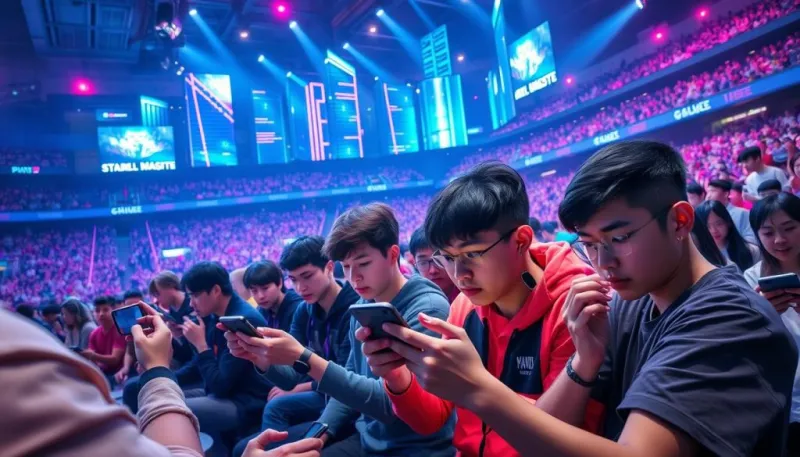
Picture this: you're standing on a packed subway car in Chicago, one hand gripping the overhead rail, the other holding your phone. You've got maybe eight minutes before your stop. You want to play something — actually play, not just watch an idle animation tick upward. What do you reach for?
If the answer is "nothing, because every good game requires two hands," then you've stumbled onto one of the most underappreciated problems in mobile game design. The assumption that players always have both hands free isn't just wrong — it's a design failure that shuts out millions of real gaming moments every single day.
A growing wave of developers is building games specifically around one-handed, single-thumb play. And the results are genuinely impressive.
The Two-Hand Assumption Is a Holdover From Console Design
Most major mobile game publishers come from a console or PC background. Their design teams think in terms of analog sticks, trigger buttons, and two-thumb input as the default state. When they port that philosophy to mobile, they recreate virtual controllers on a touchscreen — a solution that satisfies almost nobody and actively punishes anyone who can't give the game their full physical attention.
Virtual joysticks on a flat glass screen have no tactile feedback. You can't feel where the stick is without looking at it. In a fast-paced game, that means constantly splitting your visual attention between the action and your own thumbs. It's a compromise that console players would never accept, and yet it became the default for mobile gaming for years.
The studios challenging this norm aren't the big names with nine-figure budgets. They're indie teams who actually watch how people play and build around observed behavior rather than inherited assumptions.
What Single-Thumb Design Actually Looks Like
Building a game for one hand doesn't mean dumbing it down. It means rethinking which inputs matter and how to make each touch feel intentional and satisfying.
Some of the most elegant examples use tap-and-hold mechanics layered with swipe gestures — all executable with a single thumb without repositioning your grip. Others use a single-button rhythm system where timing and context determine the action, eliminating the need to juggle multiple touch zones simultaneously.
The roguelike and card-based strategy genres have thrived under this design philosophy. Games in these categories often require deep decision-making but minimal physical dexterity — a combination that translates naturally to single-thumb play. You're thinking hard, not tapping fast, and the control scheme reflects that.
Action games have a steeper challenge, but indie developers have cracked it in creative ways. Some use a single thumb for movement with auto-aim enabled by default, letting skilled players focus on positioning and timing rather than wrestling with targeting controls. Others divide the screen into contextual tap zones — tap left to dodge, tap right to attack — keeping everything reachable without shifting your grip.
Accessibility Isn't a Feature. It's a Design Standard.
The conversation around one-handed gaming often starts with convenience, but it goes much deeper than that. For players with upper limb differences, injuries, or disabilities affecting hand mobility, single-thumb design isn't a nice-to-have — it's the difference between being able to play at all or being locked out of the hobby entirely.
The mobile gaming market in the US is enormous and diverse. When developers design exclusively for two-handed play, they're drawing a line that excludes a meaningful portion of that audience for no good reason. The games that get this right don't feel like they've made accessibility concessions. They feel better — tighter, more focused, less cluttered with inputs that don't serve the experience.
This is where the indie advantage becomes most visible. A small team can iterate quickly on control feedback, test with actual players across different physical situations, and make changes without navigating layers of corporate approval. A major publisher with a standardized UI toolkit and a legacy control scheme doesn't have that flexibility.
Why Big Publishers Keep Getting This Wrong
It's not that large mobile game studios are unaware of the one-handed play problem. Many of them have UX research teams that document exactly how players hold their phones. The issue is that organizational incentives don't always reward elegant simplicity.
Major publishers are often optimizing for session depth, monetization touchpoints, and feature parity with their console titles. Complex control schemes can justify premium content, create learning curves that extend engagement, and signal that the game is a "real" gaming experience rather than a casual time-killer. There's a business logic to the complexity, even when that complexity works against the player.
Indie developers, by contrast, are usually optimizing for the opposite: get players into the fun as fast as possible, keep friction low, and earn word-of-mouth through genuinely satisfying play. That alignment of incentives with player experience is exactly why so many of the most celebrated control innovations in mobile gaming come from small teams.
Playing Anywhere Means Designing for Anywhere
At G2G Mobile Arena, the whole idea is that great gaming shouldn't be confined to the couch. But "play anywhere" is an empty promise if the games themselves require you to be sitting at a table with both hands free and full concentration.
The one-handed revolution is a direct response to that gap. It's developers saying: we know you're on the bus, in line at the DMV, eating lunch with one hand, or just lying on your side too tired to sit up. We built this for that moment, not the idealized moment where you're perfectly positioned with perfect focus.
That's not lowering the bar for mobile gaming. That's understanding what mobile gaming actually is.
The best games being built right now for single-thumb play aren't compromises. They're purpose-built experiences that happen to work brilliantly for everyone — two-handed players included. Because when a game is designed to be intuitive with one thumb, it's almost always more intuitive with two. Elegant design tends to work that way.
If you haven't explored what's out there in the one-handed space, you're missing some of the most thoughtful game design happening in the industry right now. And you can play all of it on the train.