Pocket Powerhouses: How Your Phone Quietly Became a Legitimate Gaming Console
For years, the knock on mobile gaming was simple: it's casual, it's shallow, and it's no match for "real" gaming. Console loyalists laughed it off. PC gamers barely acknowledged it. And honestly? Back in the early days of Angry Birds and match-three puzzles, they had a point.
But here's the thing — that argument is aging fast. Like, really fast.
Today's flagship smartphones are packing hardware that would've been considered elite gaming PC territory just a few years ago. And the games running on them? They're not just keeping pace with console titles anymore. In some cases, they're setting the pace. If you haven't paid close attention to what's happening in the mobile gaming space lately, you might be genuinely shocked at where things stand.
The Hardware Leap Nobody's Talking About Enough
Let's start with raw power, because it's the foundation everything else is built on.
Apple's A-series chips and Qualcomm's Snapdragon processors have undergone generational leaps that most mainstream tech coverage breezes right past. The Apple A17 Pro, for instance, introduced hardware-accelerated ray tracing — the same lighting technology that made the PlayStation 5 launch titles look jaw-dropping. We're talking real-time reflections, dynamic shadows, and lighting behavior that responds to the game world in genuinely cinematic ways.
Qualcomm's Snapdragon 8 Gen 3 brought similar firepower to Android devices, with dedicated gaming-focused optimizations baked directly into the chip architecture. These aren't marketing buzzwords — they're measurable performance gains that developers are actively designing around.
The result? Games like Genshin Impact, Honkai: Star Rail, and Diablo Immortal aren't just "pretty for a phone game." They're objectively beautiful games, full stop.
Storylines That Actually Go Somewhere
Graphics are the easy sell. What's harder to quantify — but maybe more important — is how mobile game writing has matured.
For a long time, mobile narratives were either nonexistent or an afterthought. You tapped through dialogue to get to the gameplay. Story was decoration, not substance.
That has genuinely changed. Genshin Impact has built a sprawling, years-long narrative with dozens of characters, political intrigue, and lore deep enough to fuel entire fan wikis. Final Fantasy VII Ever Crisis and Octopath Traveler: Champions of the Continent brought console-pedigree JRPG storytelling directly to your pocket. Even games in the battle royale and strategy space are investing in world-building and character development that would've seemed absurd for a mobile title five years ago.
This shift matters because it changes how players invest in games. You're not just chasing a high score anymore — you're following a story, caring about outcomes, and coming back because you actually want to know what happens next. That's the same emotional hook that drove console gaming's golden era, and mobile has figured out how to replicate it.
Mechanics That Demand Real Skill
Here's where the conversation gets interesting for competitive players.
The old critique of mobile controls — that they're inherently limited and imprecise — is losing its teeth. Yes, touchscreens have real constraints. But developers have gotten extraordinarily creative about working within them, and in some cases, designing mechanics that are better suited to touch than they would be with a traditional controller.
Games like Call of Duty: Mobile and PUBG Mobile have refined their control schemes to the point where high-level play requires genuine mechanical skill, game sense, and situational awareness. The top players in these ecosystems aren't casually tapping through matches — they're executing coordinated strategies with practiced precision.
Meanwhile, titles like Clash Royale and Marvel Snap have introduced card-based strategy mechanics with enough depth that professional players study them the way chess players study openings. The skill ceiling is real, and it's high.
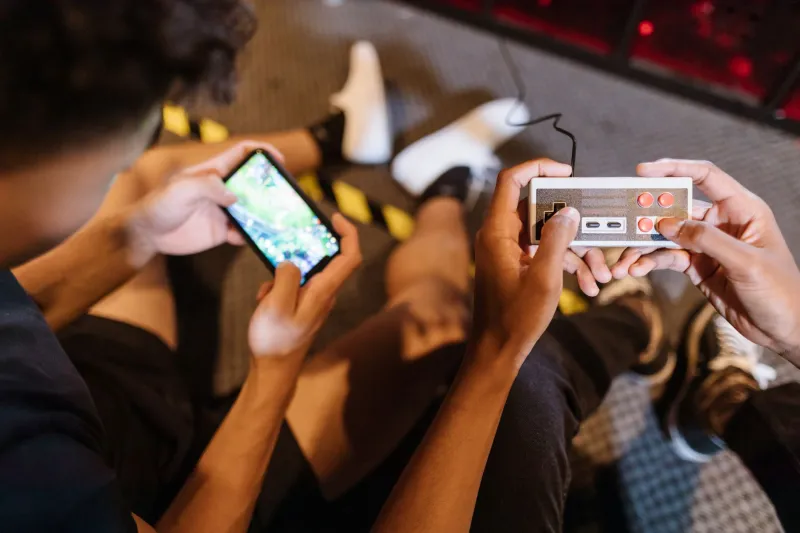
Bluetoothcontroller support has also quietly become a standard feature across most major mobile titles, which effectively removes the "but the controls" argument entirely for players who want that traditional gaming feel on their phone.
Why Developers Took the Plunge
None of this happened by accident. There's a clear business logic driving the quality arms race in mobile gaming.
The global mobile gaming market is enormous — we're talking revenues that dwarf both console and PC gaming combined. In the US specifically, the installed base of capable smartphones is massive and growing. Developers looked at that audience and made a calculated bet: invest in quality, and players will respond.
The success of games like Genshin Impact — which reportedly generated over a billion dollars in its first six months — proved the bet right in spectacular fashion. When a mobile game can outperform major console launches financially, it sends a clear signal to every developer in the industry about where resources should flow.
Cross-platform ambitions are also pushing quality upward. When a game needs to hold up on PC and console and mobile, the mobile version can't be a stripped-down afterthought. It has to be a genuine version of the experience, which means the technical investment gets made.
What This Means for You as a Player
If you've been treating your phone as a backup gaming device — something you pull out when you're away from your "real" setup — it might be time to rethink that hierarchy.
The games available on mobile right now represent some of the most ambitious, technically impressive, and mechanically rich experiences in gaming, period. Not just for mobile. In gaming, broadly.
For players at G2G Mobile Arena, this is basically the best possible news. The platform you're already carrying everywhere is getting better at a pace that's outrunning almost every other segment of the industry. The gap between mobile and console isn't just closing — in certain respects, it's already closed.
The arena has leveled up. The question is whether you're ready to meet it where it is.
The Road Ahead
Looking forward, the trajectory only gets more interesting. Cloud gaming integration is starting to blur the lines between what's running locally on your device and what's being streamed from a server farm somewhere. 5G connectivity is making low-latency multiplayer experiences more reliable across more of the country. And as foldable phone technology matures, the screen real estate argument — the last remaining hardware objection — is quietly becoming a non-issue.
Mobile gaming's "catching up" phase is over. What's starting now is something different: an era where mobile sets trends instead of following them. If you're gaming on the go, you're not playing a lesser version of the experience anymore.
You're playing the future.